


Having worked in advertising for more than two years now, I’ve thought that most people are over the initial creepiness of being served an ad for shoes they viewed two days ago. As I became more educated on online behaviour and how it forms a users’ digital footprint, I had made an assumption that the wider population had grown to accept targeted advertising as part of their online experience.
However, this was incorrect. There are many people who find online advertising to be too intrusive and too creepy. A study from last year found that people actually feel overwhelmed, interrupted, and stalked by bad digital ads, but they don’t really mind the good ones. It is this last point which I believe speaks to why brands continue to use digital advertising and do it effectively.
I’ve actually been an advocate for hyper-targeted ads in the past and been fine with brands using my data to serve me relevant ads. In my mind, it’s made sense. If I’m looking to purchase a car, I’m more than happy to be served ads for used cars within my price range.
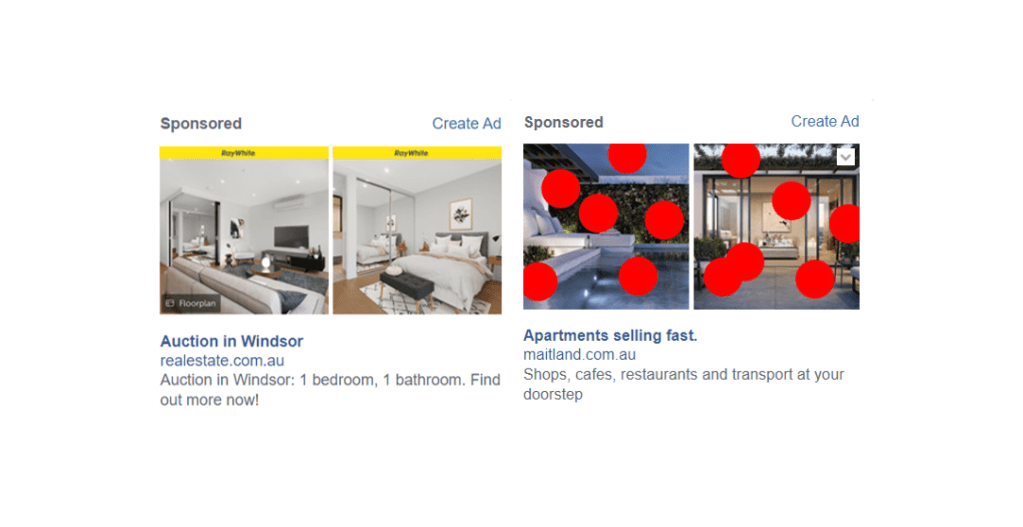
For most of the last month, my own Facebook feed has been comprised of ads for property or personal training. Whilst I’m not looking to purchase a house, it makes sense based on my online behaviour (looking at client websites, spending a lot of time on Realestate.com.au and Domain) that I would be (side note: I’m glad to see Commonwealth Bank clearly aren’t sharing my account balance). I’ve also recently signed up for a gym, so PT ads were relevant and appreciated at the time.
Whilst I can welcome these kinds of ads, there’s one advertiser on Facebook that simply puzzles me. If you’re not familiar with Wish, they’re a San Francisco-based website similar to Amazon who partner with merchants, mostly from China, to sell low priced goods directly to customers. Wish serves me ads which would have you think that I enjoy being cruel to cats or I’m a serial killer with a foot fetish (see below).

This initially had me worried (“What the f***?”). However, nothing here aligns with where I’ve been or what I’ve done online, but they appear to be very personalised – why else would these four things be served in order? My personal theory is that the weirdest products attract the most engagement on Facebook (ie. people spend time looking at it and possibly click out of curiosity). The Facebook algorithm will then think that this weird product must be popular and continue to serve it to as many users as possible.
This is what I’d consider bad ad targeting. I’m certainly not going to go on to their site after looking at this and purchase any of these products. Simply put, Wish has wasted their money putting this ad in front of me. What I would prefer is a carousel featuring cheap clothes I’d be able to exercise in – something relevant to me. If it means a company looks through my online data to work out what this is, I’m mostly okay with that.

If you’re reading this, you’re likely well versed in all things marketing. So, do you might share a similar sentiment to me – don’t mind targeted ads, as long as they’re relevant and not confusing? Or are you weary of companies deciding what’s best to put in front of you? Let me know in the comments below! Bonus points for anyone who shares the weirdest Wish ad they’ve been served.

 JOC.DM
I’ll be honest, sometimes I hate ads, sometimes i don’t really just depends on my mood. but surprisingly I really haven’t had any strange wish ads just yet. But who knows maybe my luck will change
LikeLike
I agree with mood impacting how I respond, but I tend to opt for ‘ignore’ if I’m not feeling it.
Maybe you’ll be served a few whacky ads now that you’ve looked at this post!
LikeLike
I think you are bringing up a really interesting topic which can form a great debate. For myself personally I hate ads, I find them annoying and have all possible ‘ad blocker’ applications installed on my devices. I also hate the fact that they are using my personal information to try and persuade me to purchase a product or service. I suppose with that point of view it is completely opposite to you. Great read however Josh!
LikeLike
Thanks Emily! I’m aware that I’m likely in the minority who aren’t as opposed to being served ads, I guess it comes with working in the field. But I completely understand why people are opposed to their data being used for this. It can feel a bit like you’re being exploited or manipulated.
LikeLike
Great post Josh! A very interesting topic. As a consumer I find it creepy but as a marketer I know how useful it can be!
LikeLike
Thanks Monique! I guess it’s up to us to find the balance between being creepy and effective to provide a winning outcome for businesses and consumers alike.
LikeLike
There is such a fine line when it comes to targeted ads. Like, none of us like ads, but is it the lesser of two evils two have ads that are actually relevant to our lives? Interesting question to ask, and there probably is no right or wrong answer
LikeLike
I agree that it’s a murky area Jason and share your sentiments re: ads that are actually relevant. I feel that the negative sentiments about personal data being used comes from advertisers using it to outright manipulate consumers eg. Cambridge Analytica. It will be interesting to see whether this area becomes more regulated in the future.
LikeLike